


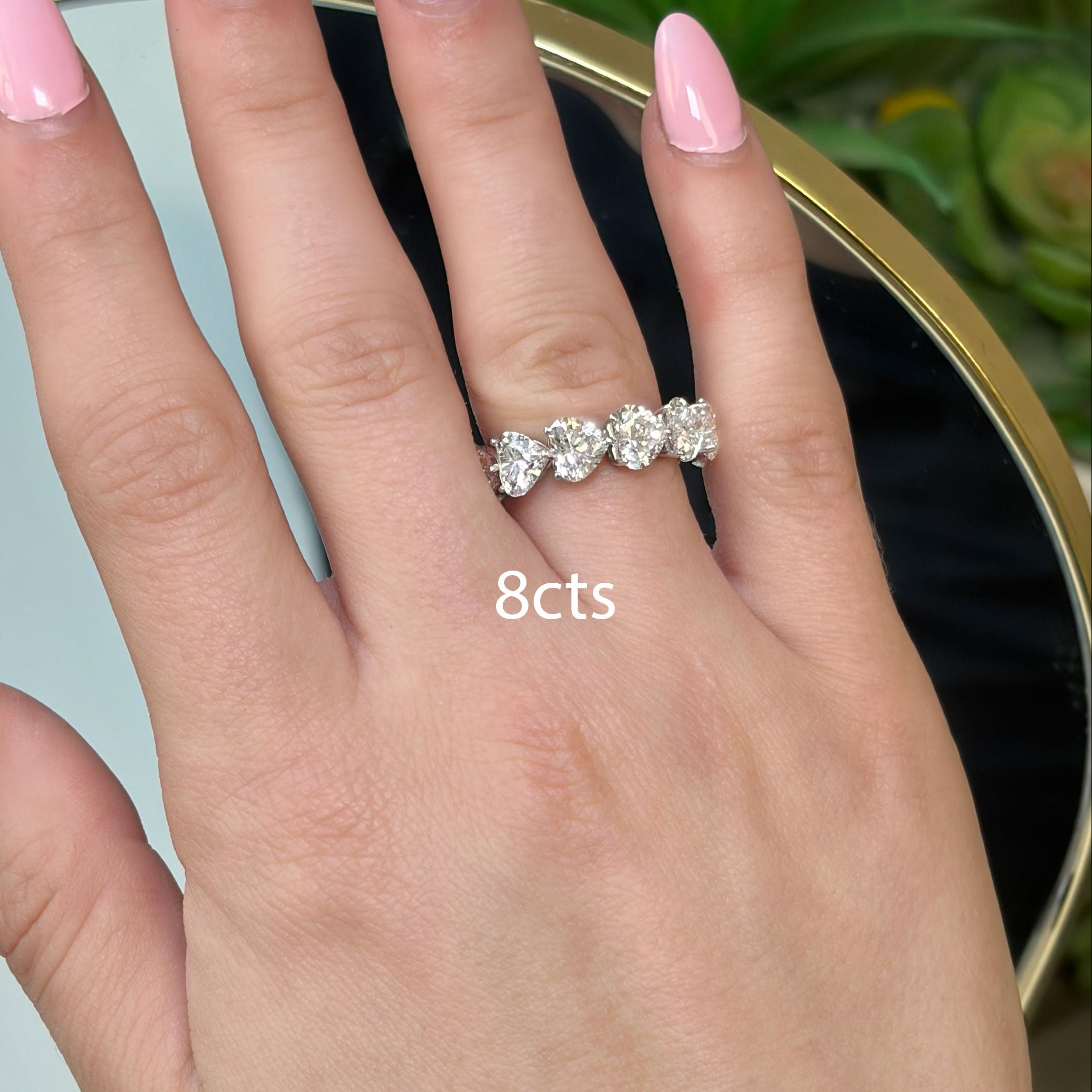
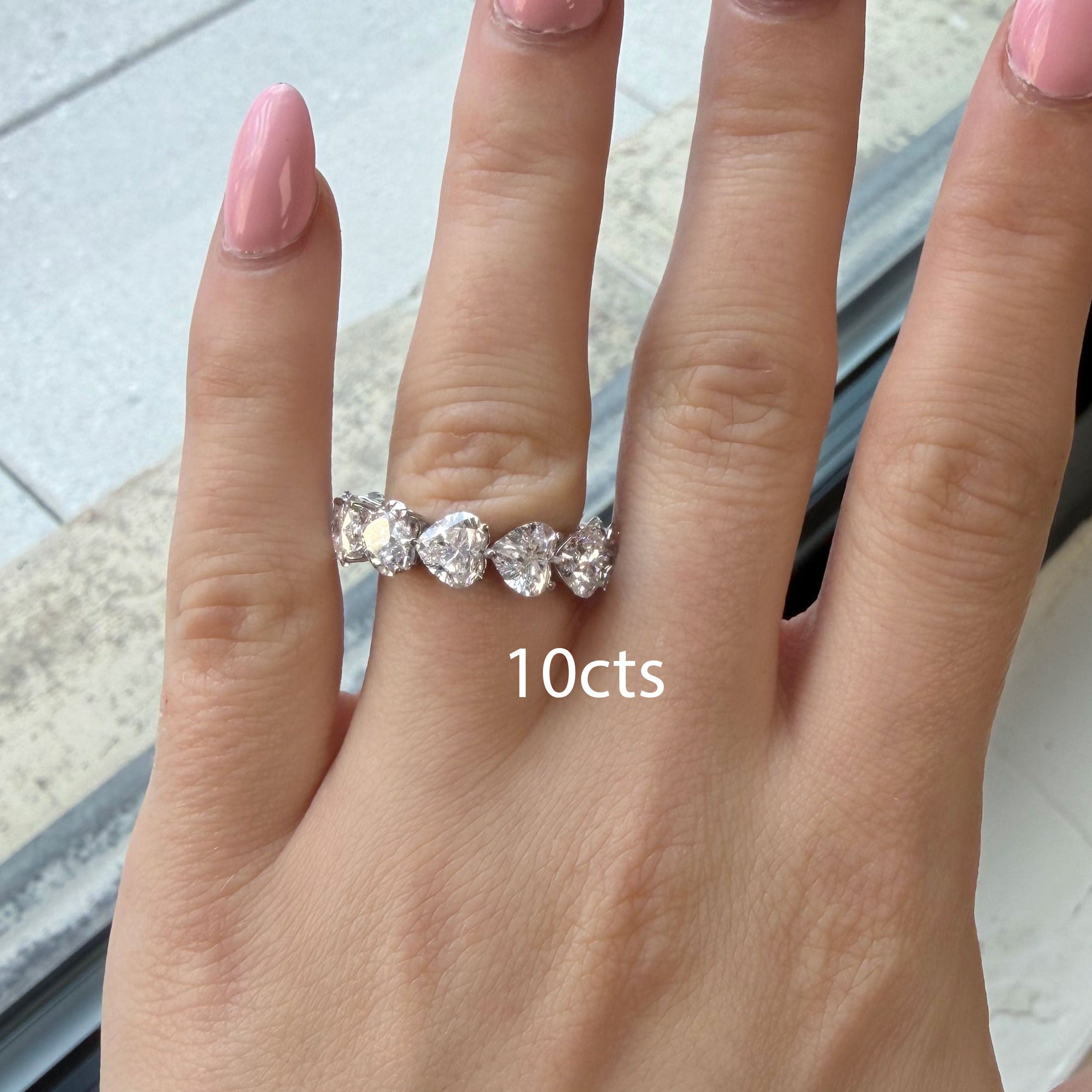


Lab-Grown Heart Diamond Eternity Band, 14k Gold
Tax excluded. Shipping calculated at checkout
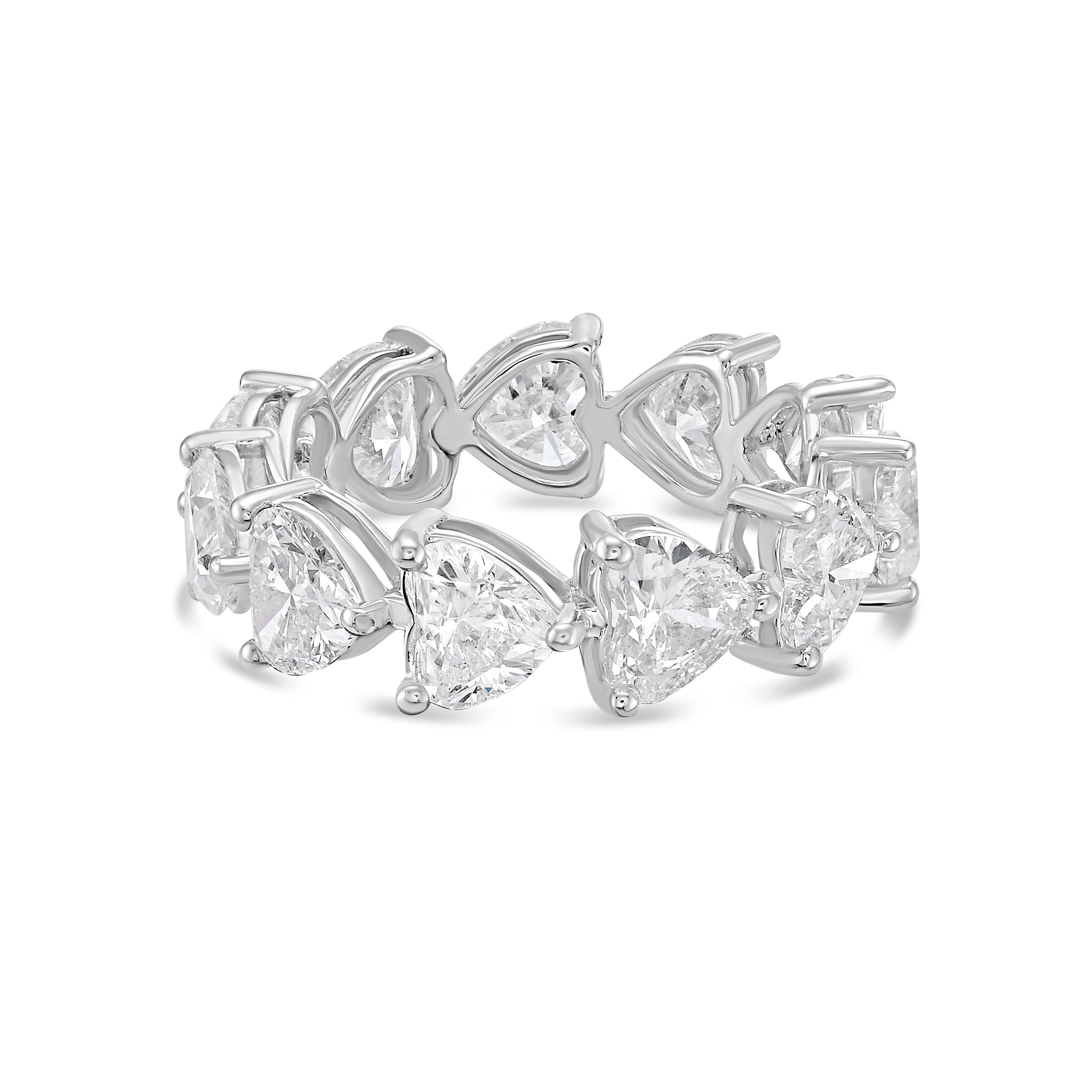
Lab-Grown Heart Diamond Eternity Band, 14k Gold:
- Lab-grown heart-cut diamonds, full eternity
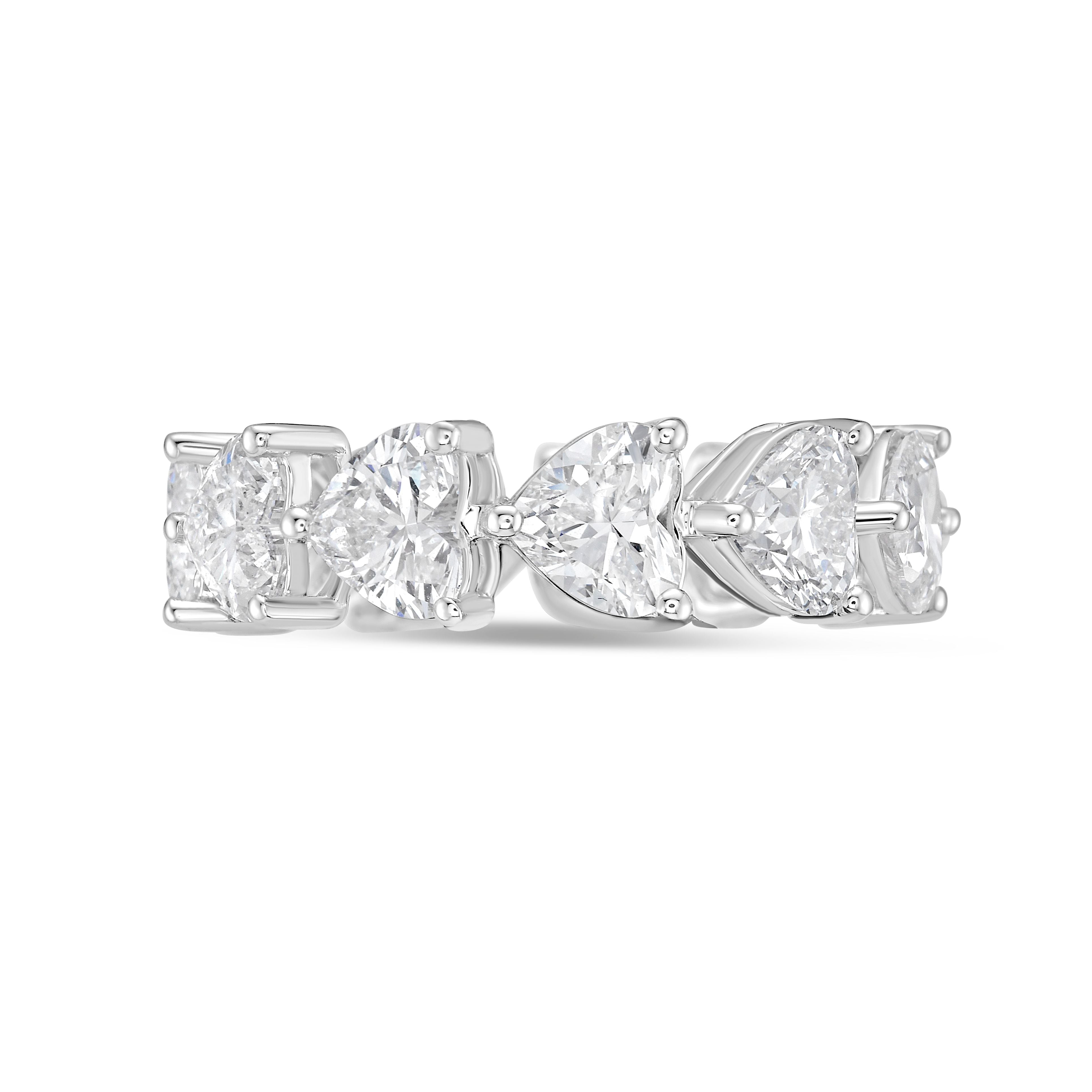
- Shared-prong setting
- DEF color, VS clarity, excellent cut
Available in all sizes
Insured Shipping
Lead Time
If the item is not in stock, please allow 2-4 weeks for delivery.
Complete Description
A full eternity band set with lab-grown heart-shaped diamonds in a shared-prong setting — each heart-cut stone visible from tip to rounded base, held by prongs shared between adjacent stones for maximum diamond exposure and a smooth, continuous line around the finger. Available in 14k white, yellow, or rose gold, in seven total carat weight options from 2ct to 15ct, starting at $1,300.
Every diamond is DEF color and VS clarity with an excellent cut grade, matched across the band for consistent heart symmetry. The shared-prong construction keeps the ring's profile low and comfortable for daily wear while ensuring the heart silhouettes remain the focal point.
What makes heart eternity bands distinctive
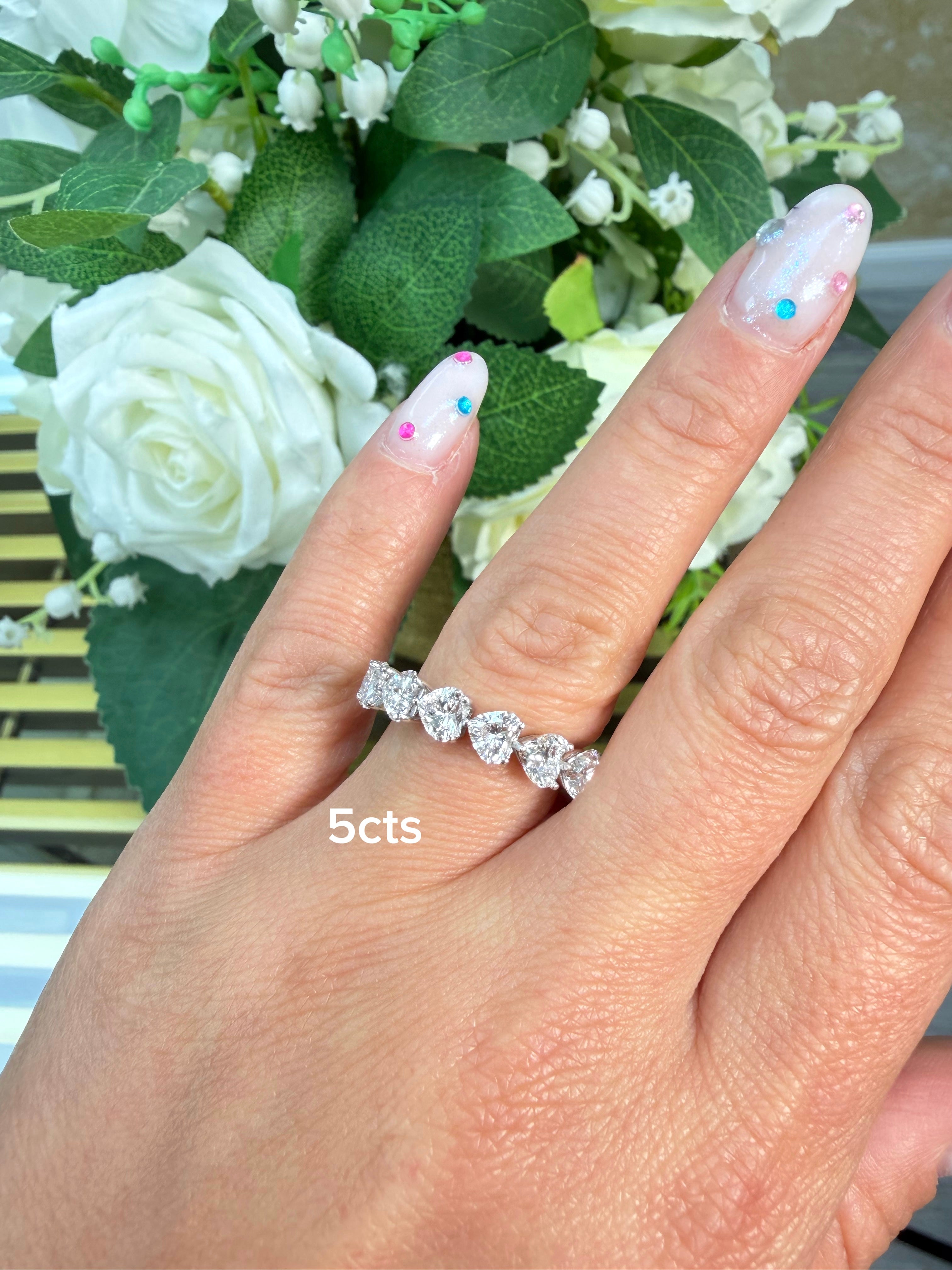
Most eternity bands use round brilliant, oval, or baguette cuts — hearts are less common and more visually specific. The symmetrical heart outline creates a repeating graphic pattern around the finger that reads clearly up close and catches the eye at a distance. At lower carat weights the hearts are small and the effect is delicate; at higher carat weights each heart is substantial enough to be individually visible and the band becomes a statement piece.
How it wears
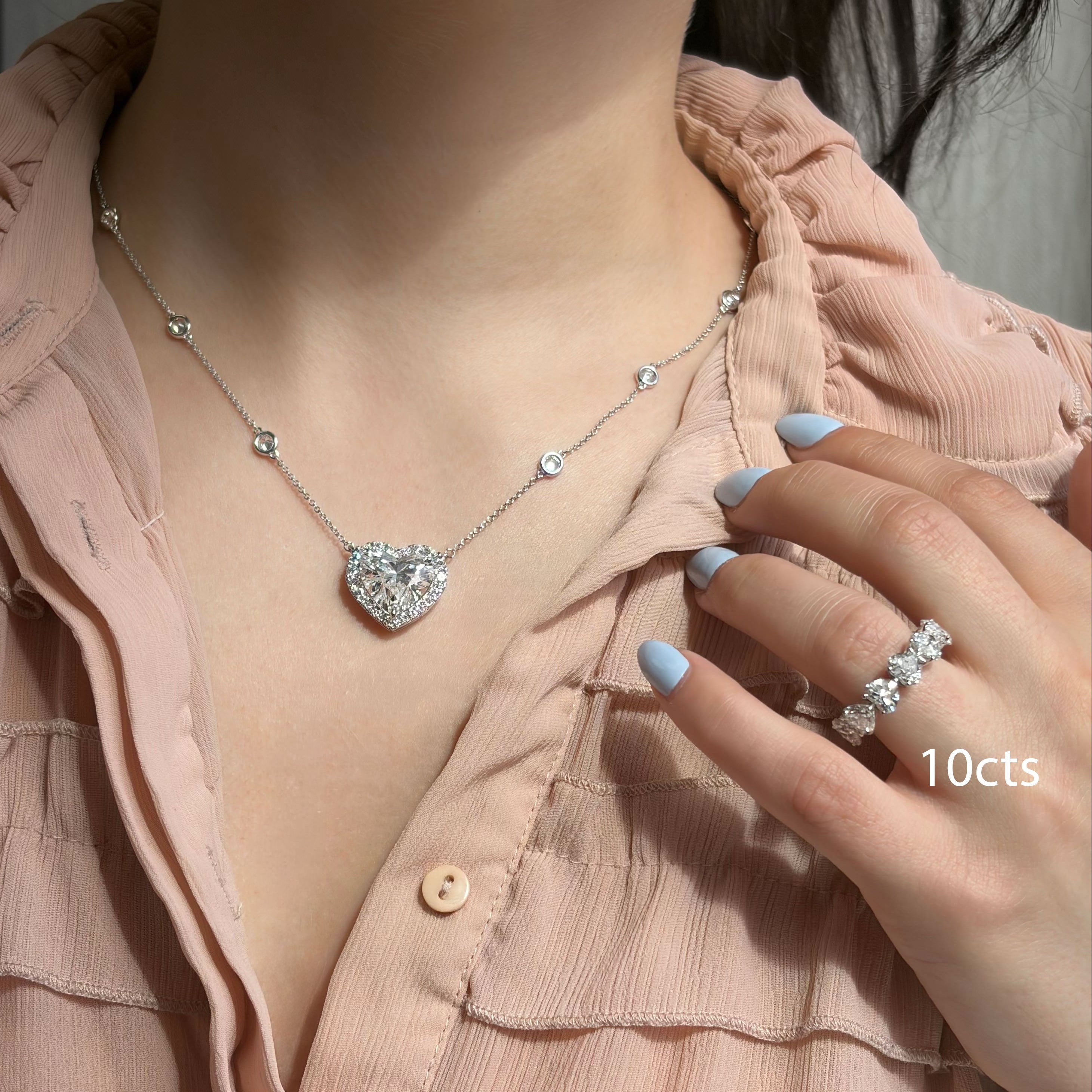
A heart diamond eternity band works as a standalone wedding band, an anniversary upgrade, or a stacking piece alongside a solitaire or other bands. The heart shape pairs most naturally with other heart-motif jewelry — the heart pendant necklace in our lab-grown pendants collection is photographed with this ring as a coordinated set. It also stacks cleanly with plain bands or pavé eternity bands where the heart silhouette stands out against a neutral background.
Cleaning: soak in warm water with mild soap, brush gently around the prong bases, rinse, and pat dry. Avoid harsh chemicals. Store separately to protect the hearts' pointed tips.
Choose options

Frequently Asked Questions
A shared-prong setting places each diamond so that adjacent stones share a single prong between them rather than each stone having its own dedicated prongs. This exposes more of each diamond to light, reduces metal visibility, and creates a more continuous line of stones. It's the most common setting style for eternity bands.
A full eternity band has diamonds set all the way around the entire circumference of the ring — there's no plain metal section at the back of the shank. This means the band looks identical from any angle and catches light all the way around. A half-eternity band has diamonds only on the front-facing portion. This ring is a full eternity design.
The carat weight you select is the total weight of all heart diamonds around the full circumference of the ring. Because the band is a full eternity, every stone all the way around is included in the total. Ring sizing affects how many stones fit around the band, which is why pricing may vary slightly by size.
Yes — the low profile and full eternity construction make it well-suited for daily wear as a wedding band, either worn alone or paired with an engagement ring. For pairing with a solitaire or halo engagement ring, a thin heart eternity band typically sits most comfortably flush against rings with a standard shank width.
Yes. Lab-grown diamonds are chemically, physically, and optically identical to mined diamonds — the only difference is how they're produced. They're graded on the same 4Cs standard (cut, color, clarity, carat weight) and have the same hardness (Mohs 10) and brilliance.
All standard ring sizes are available. Please specify your size at checkout or contact us before ordering if you need sizing guidance. Pricing may vary slightly by size depending on the number of stones needed to complete the full circumference.