
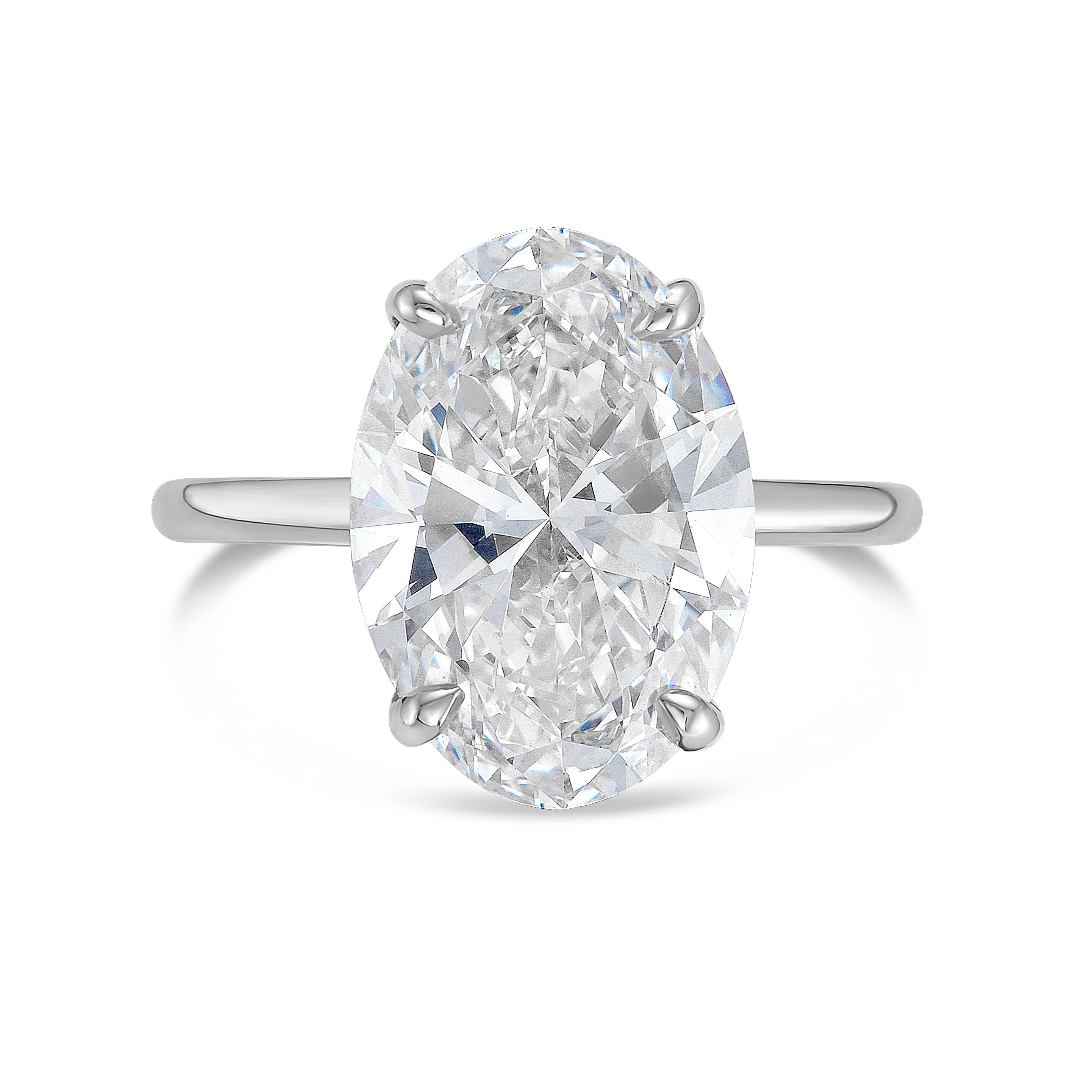
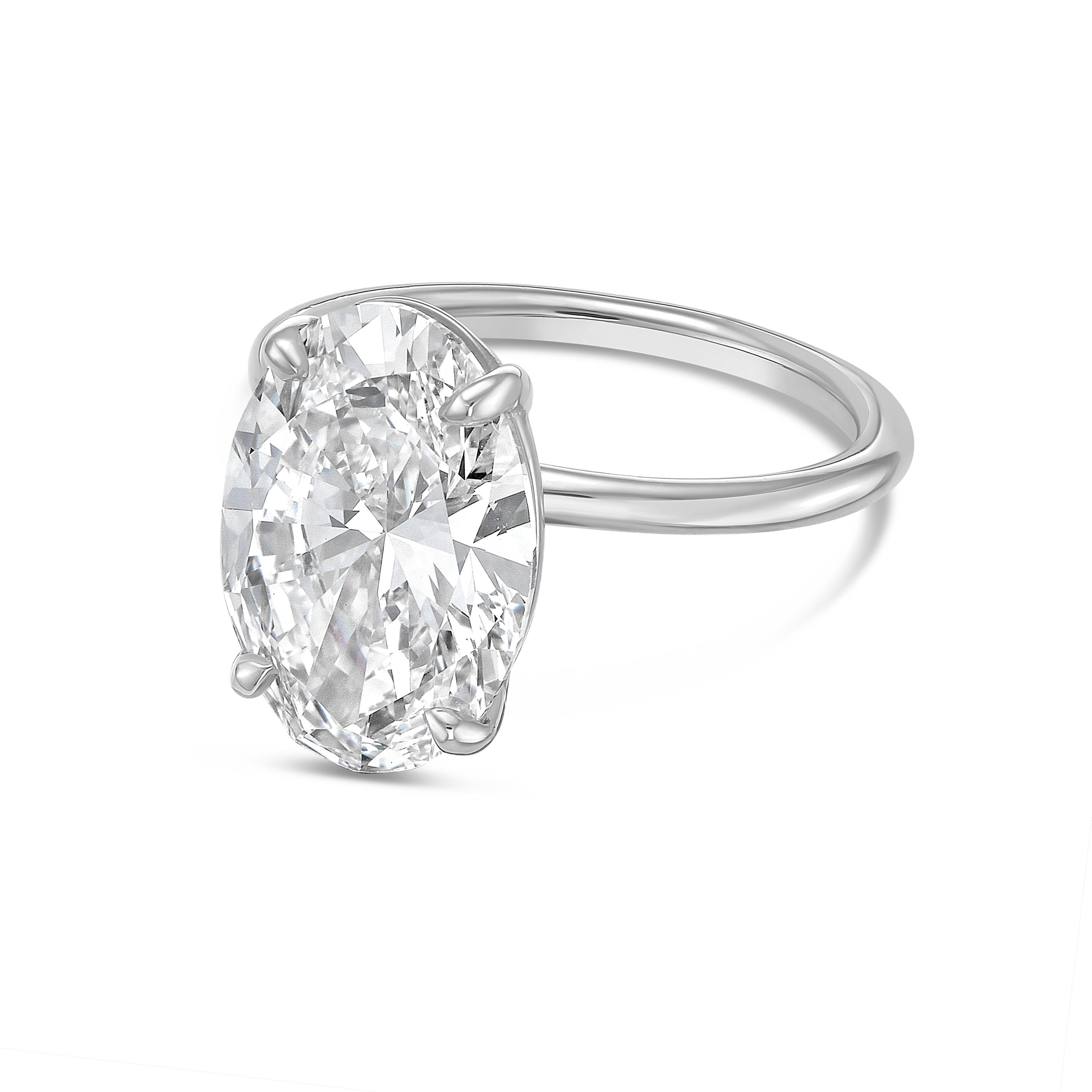
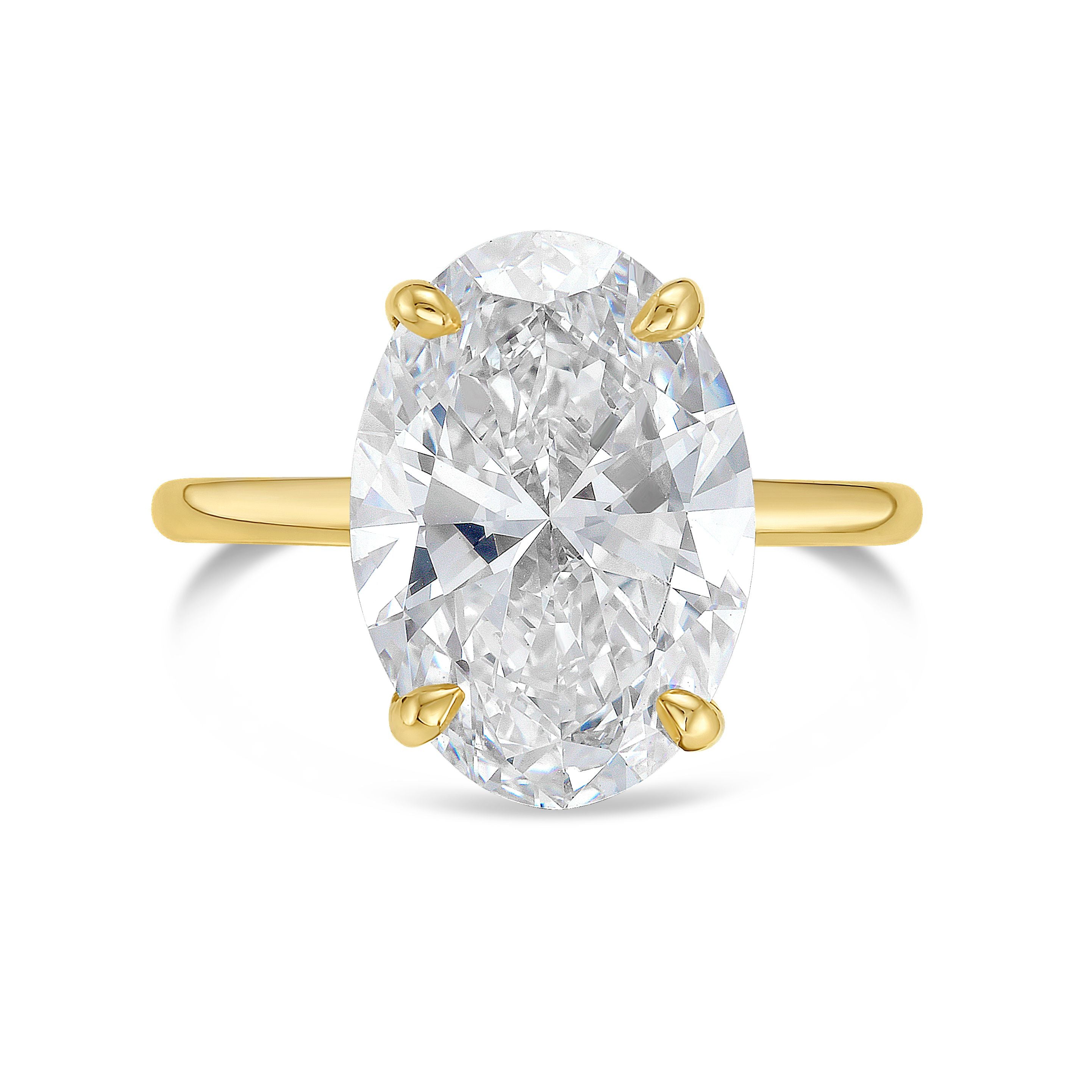
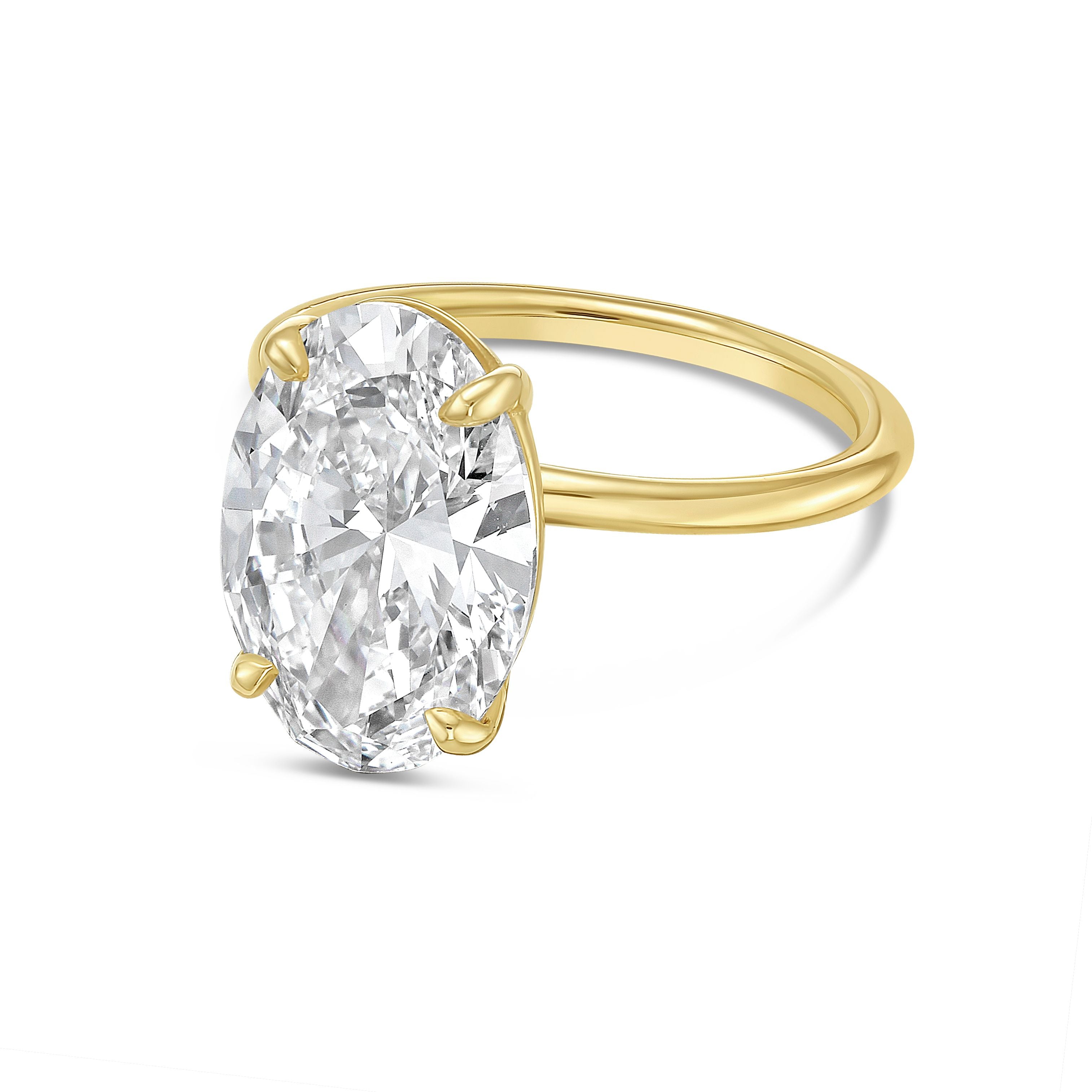
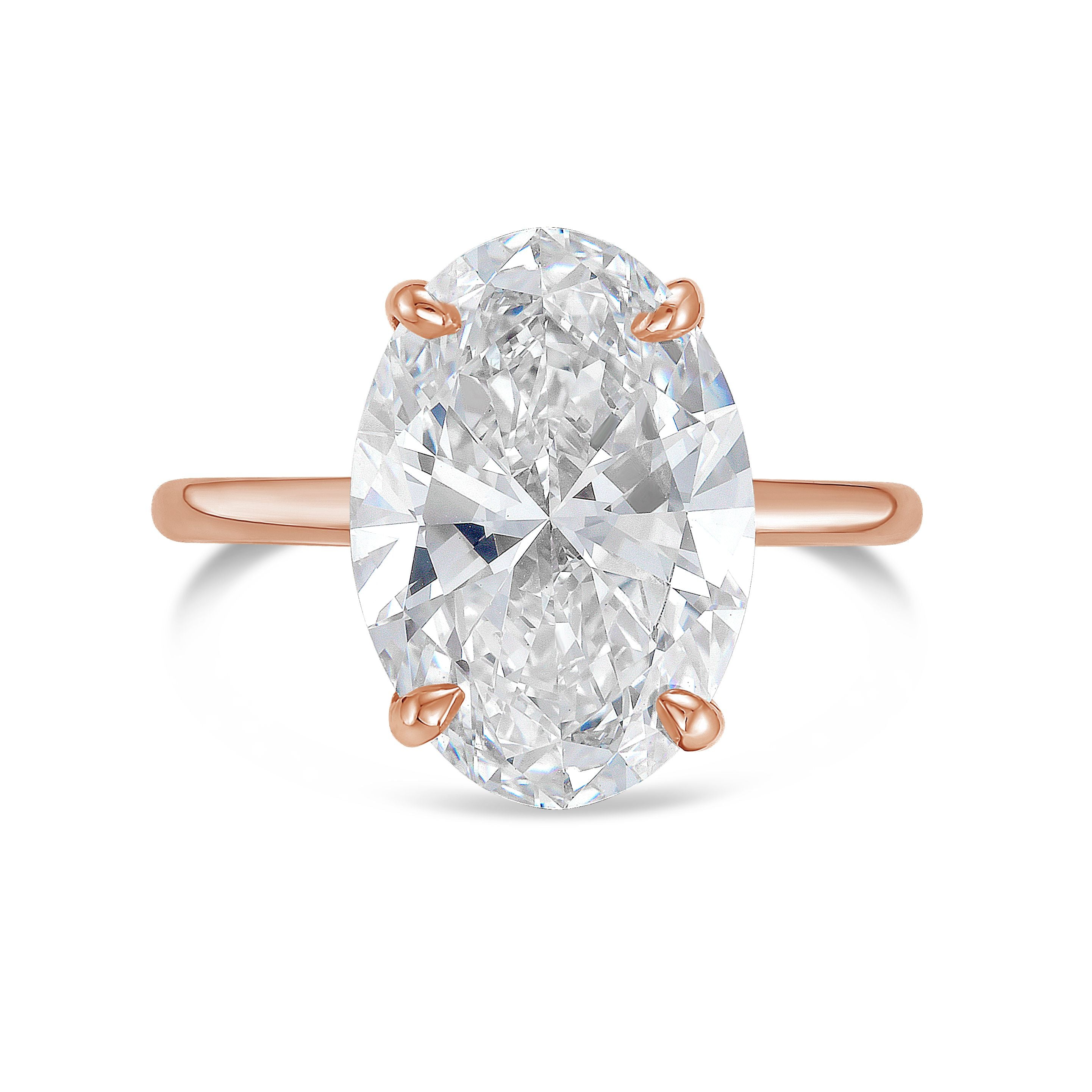
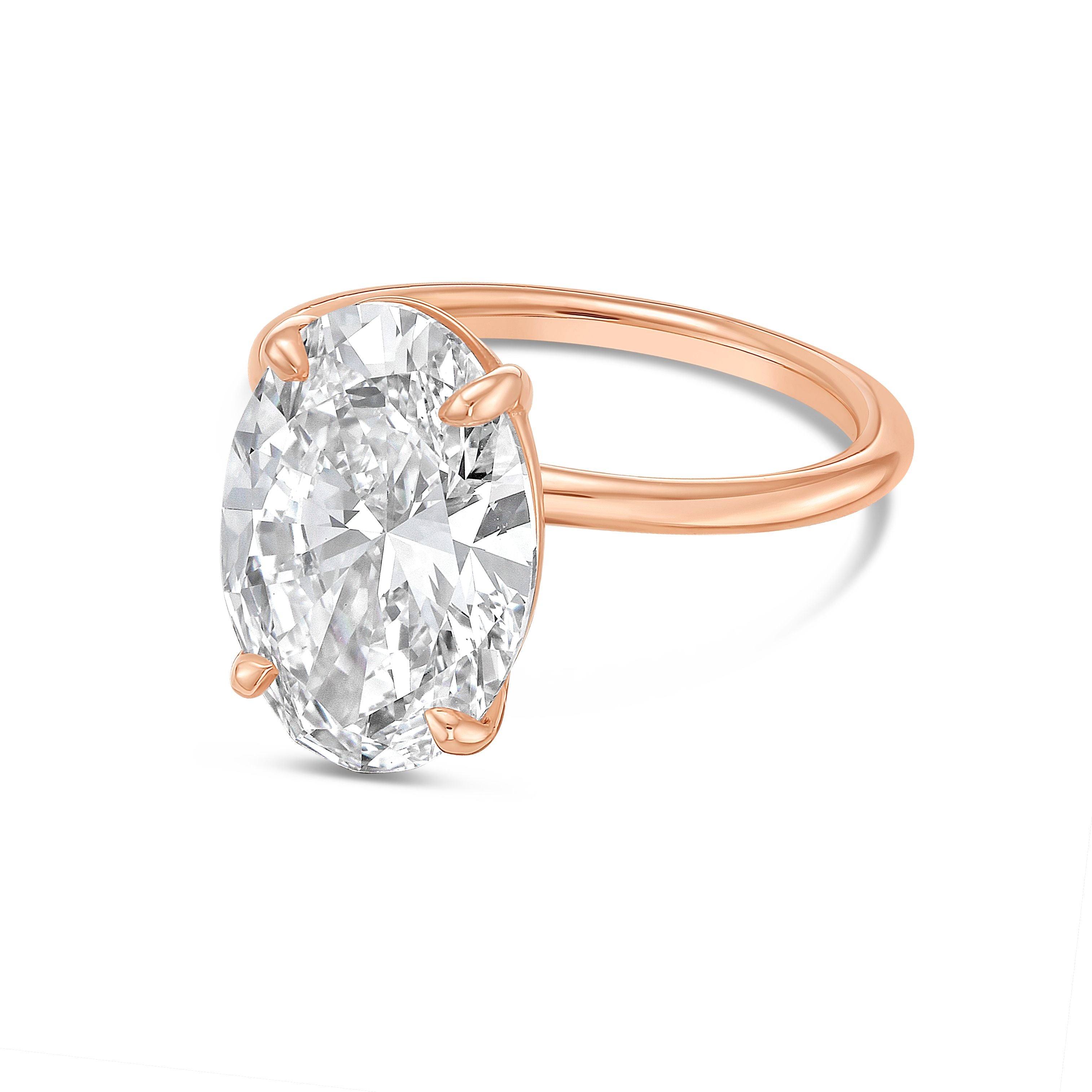
Lab-Grown Oval Diamond Solitaire Engagement Ring, 18K Gold
Tax excluded. Shipping calculated at checkout
18kt Gold Lab Grown Oval Solitaire Engagement Ring:
- Lab-grown oval cut center diamond
- Classic solitaire setting
- DEF color, VS clarity, excellent cut
- All ring sizes available — specify size at checkout or contact us before ordering
All sizes available for order, inquire to place order
Insured Shipping
Lead Time
If the item is not in stock, please allow 2-4 weeks for delivery.
Complete Description
A clean oval diamond solitaire — one stone, one band, the diamond as the complete story. Each ring features a lab-grown oval cut center diamond in a classic solitaire setting, in 18kt yellow, white, or rose gold. Available in 13 carat weights from 1ct to 30ct, starting at $1,100. Every diamond is DEF color, VS clarity, excellent cut.
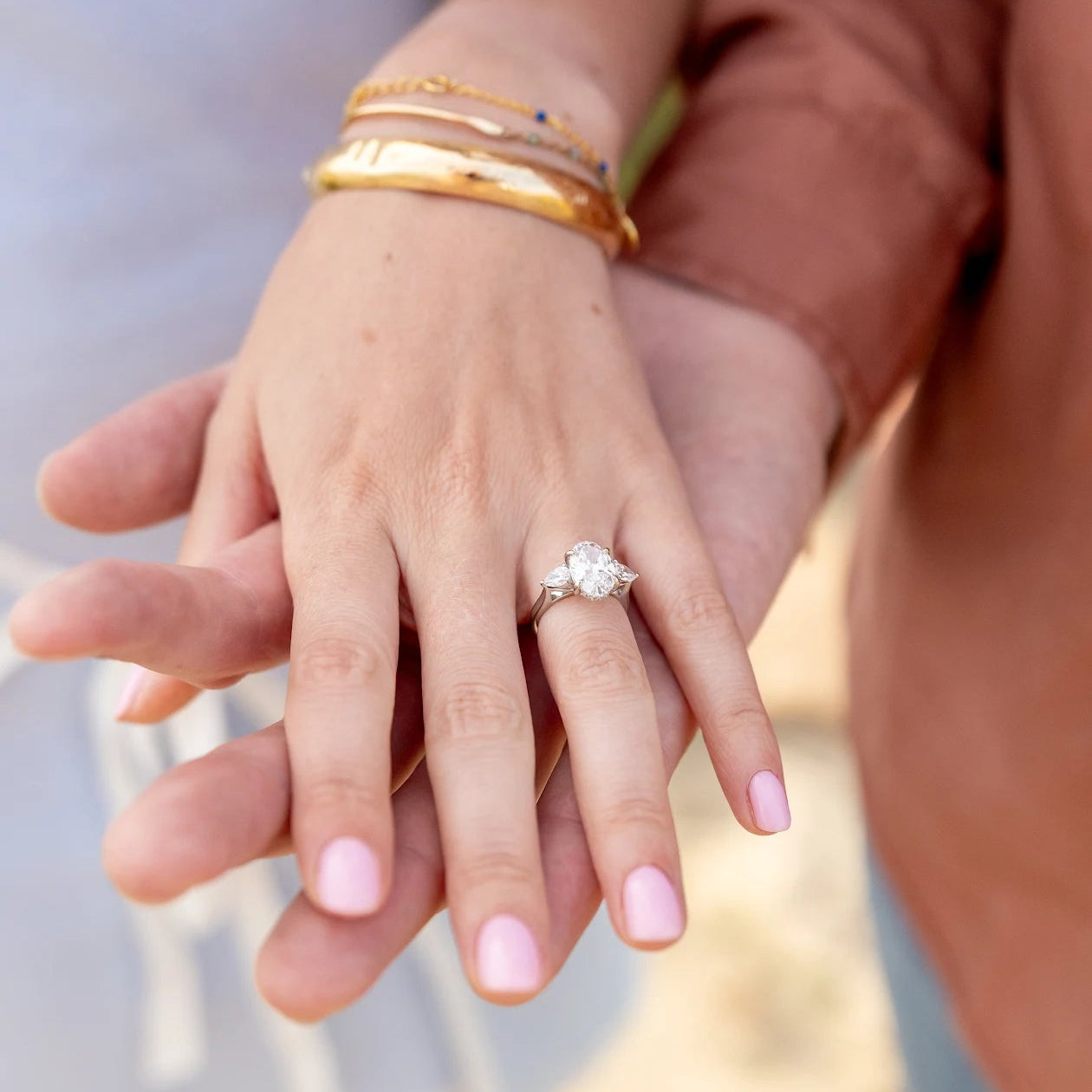
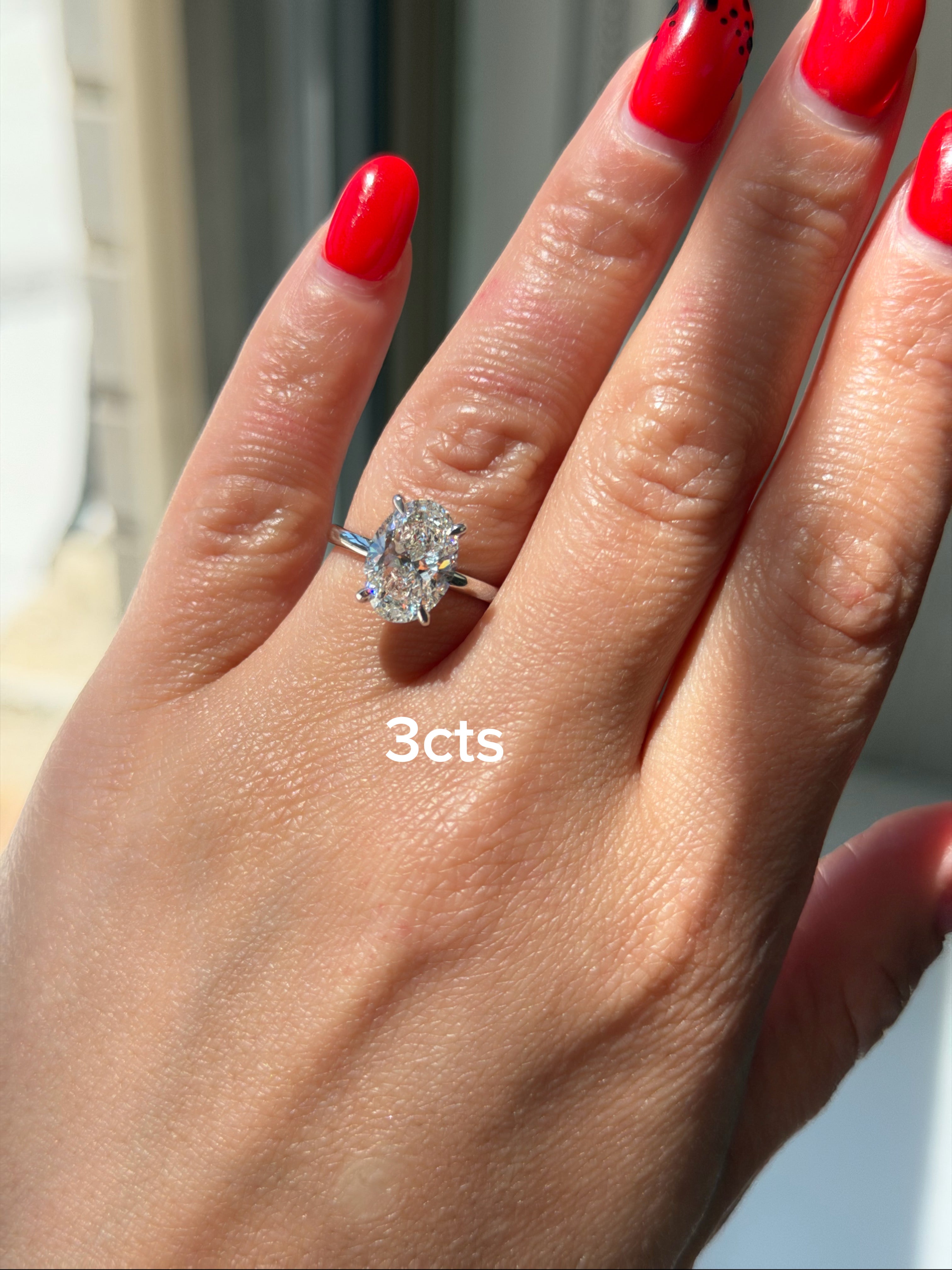
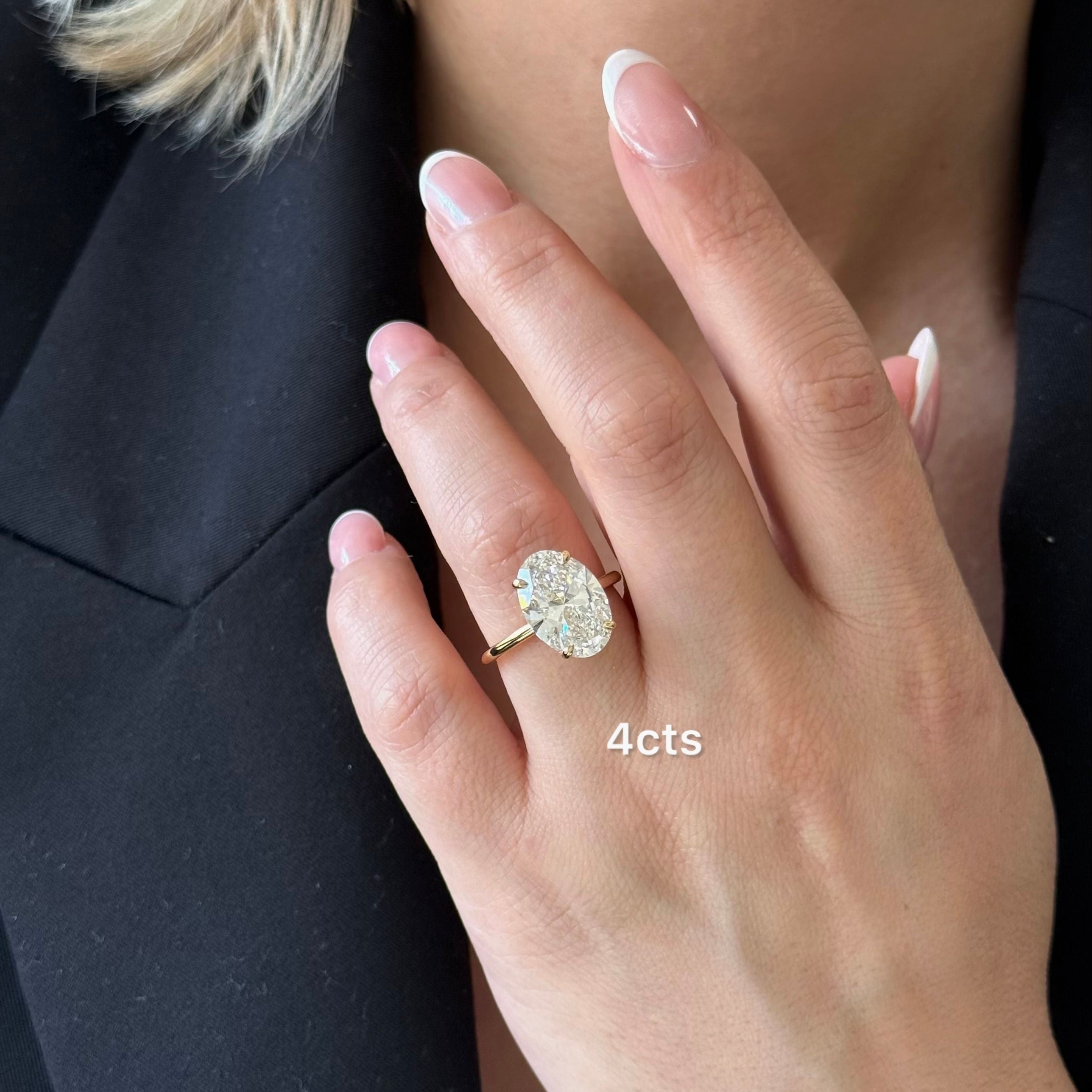
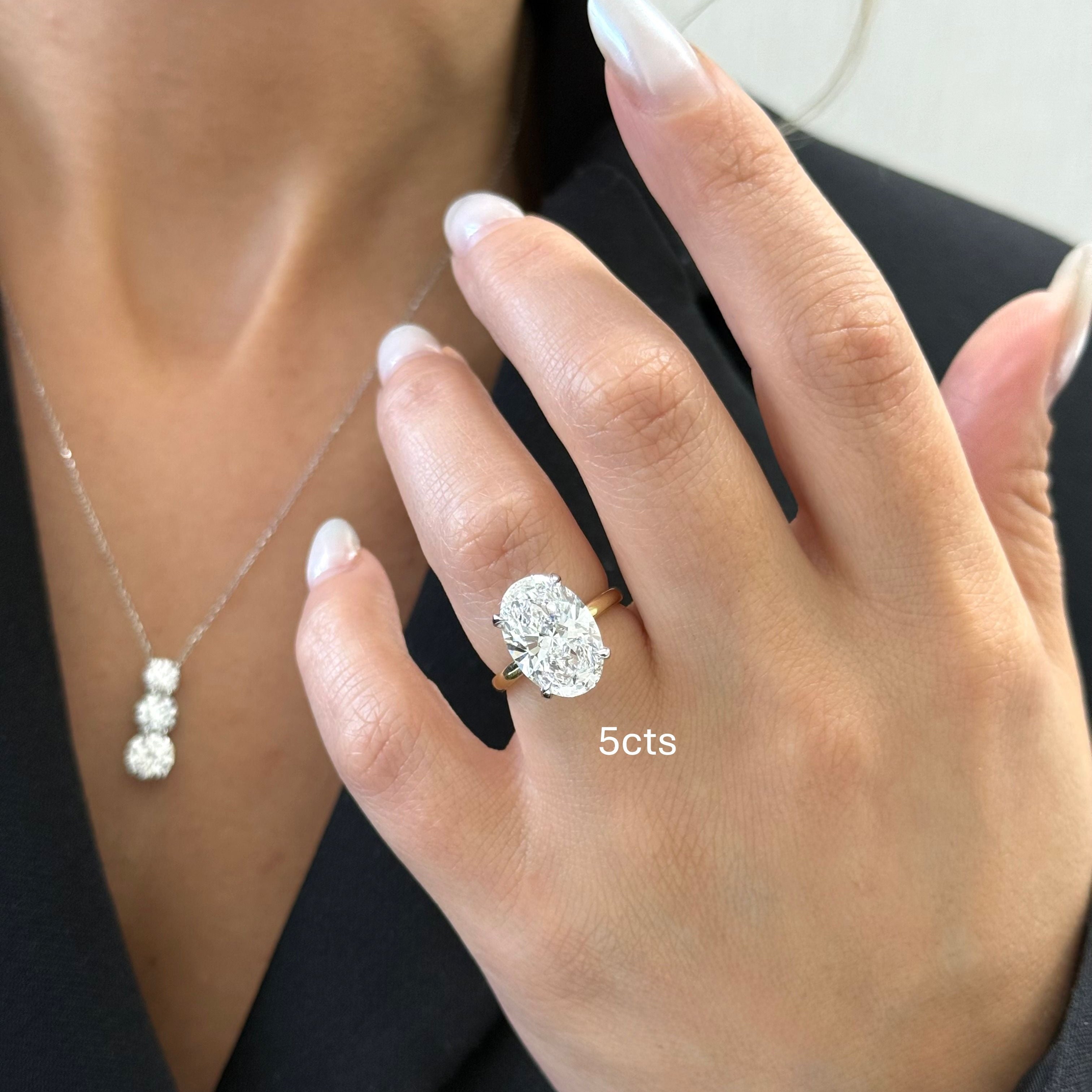
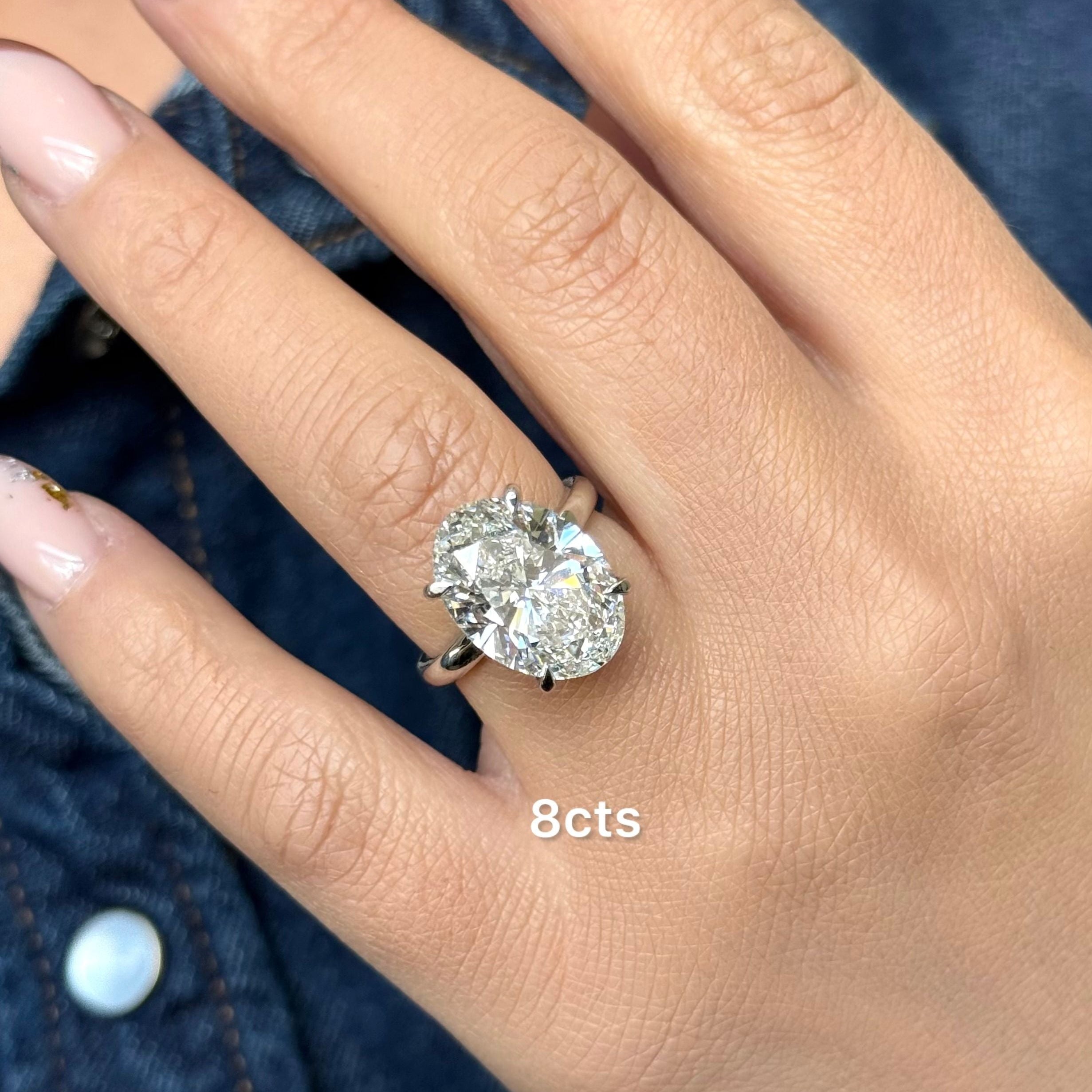
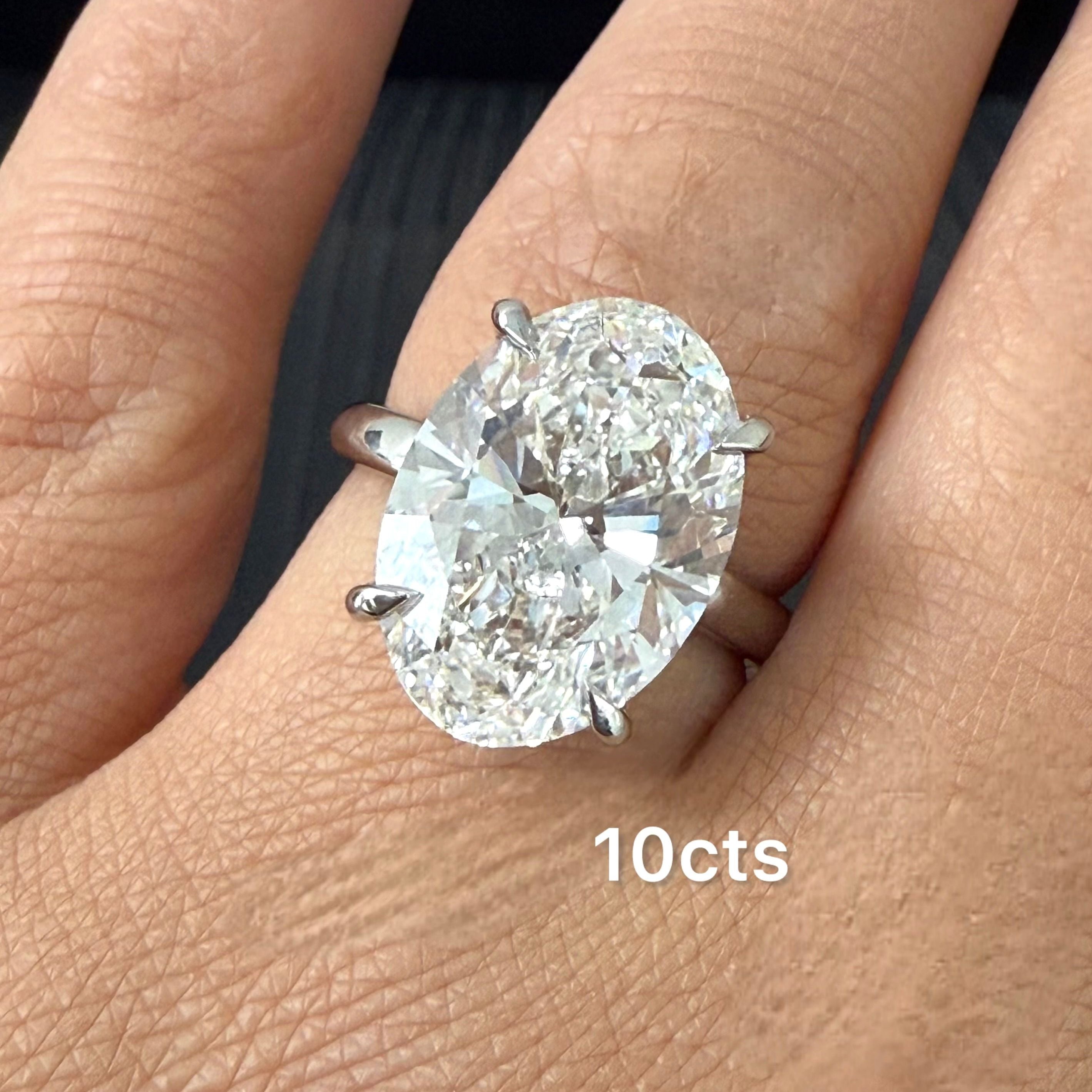
The oval cut elongates the finger more than any other engagement ring shape — the stretched ellipse reads longer than its actual carat weight, which is part of why oval has become one of the most popular engagement cuts in fine jewelry. At 1ct, the solitaire reads as refined and modern; at 5ct+, the oval begins to command significant visual presence; at 10ct and above, this becomes a statement ring.
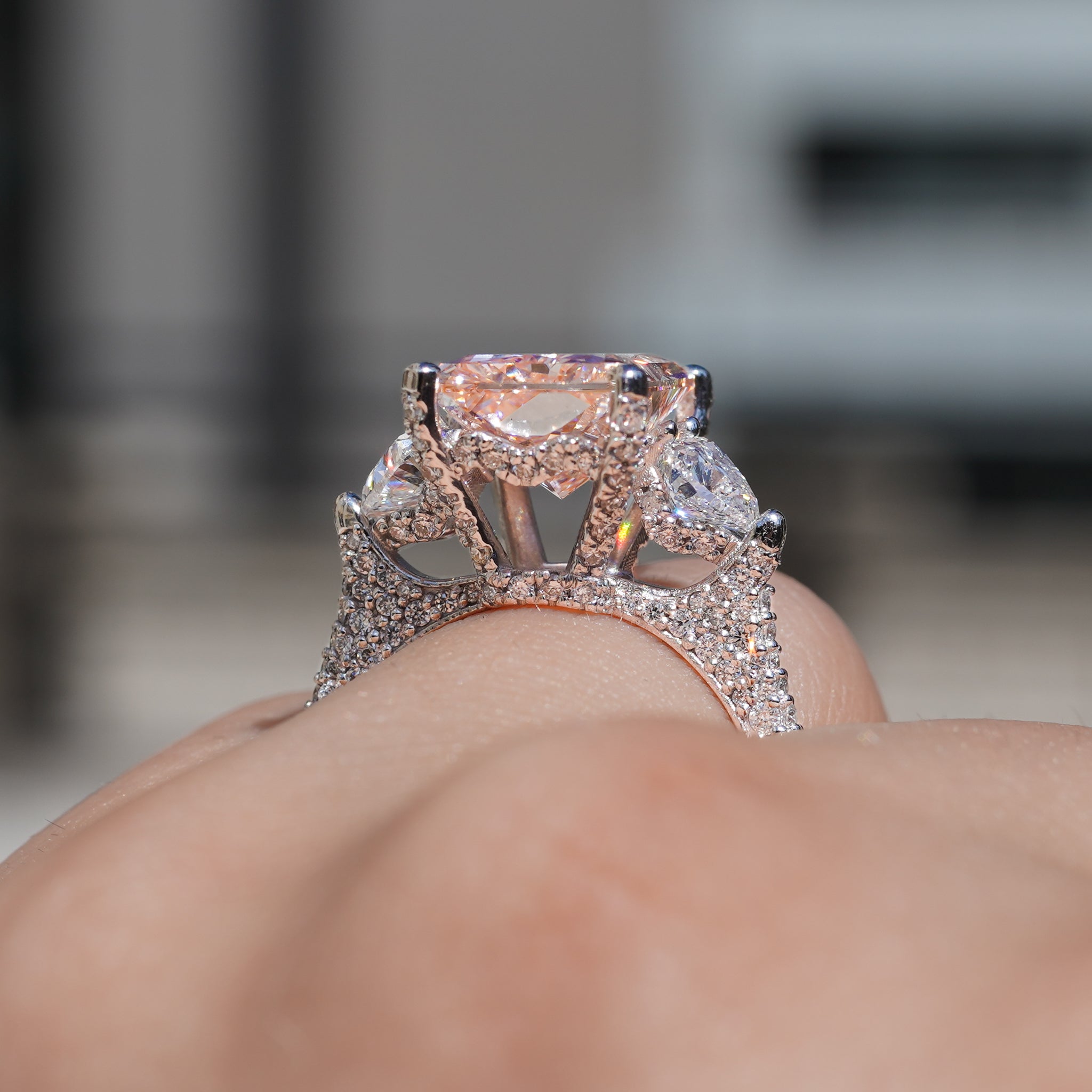
The solitaire setting keeps nothing between the diamond and the eye — no halo, no pavé, no side stones. The oval carries the design entirely.
Choosing your scale
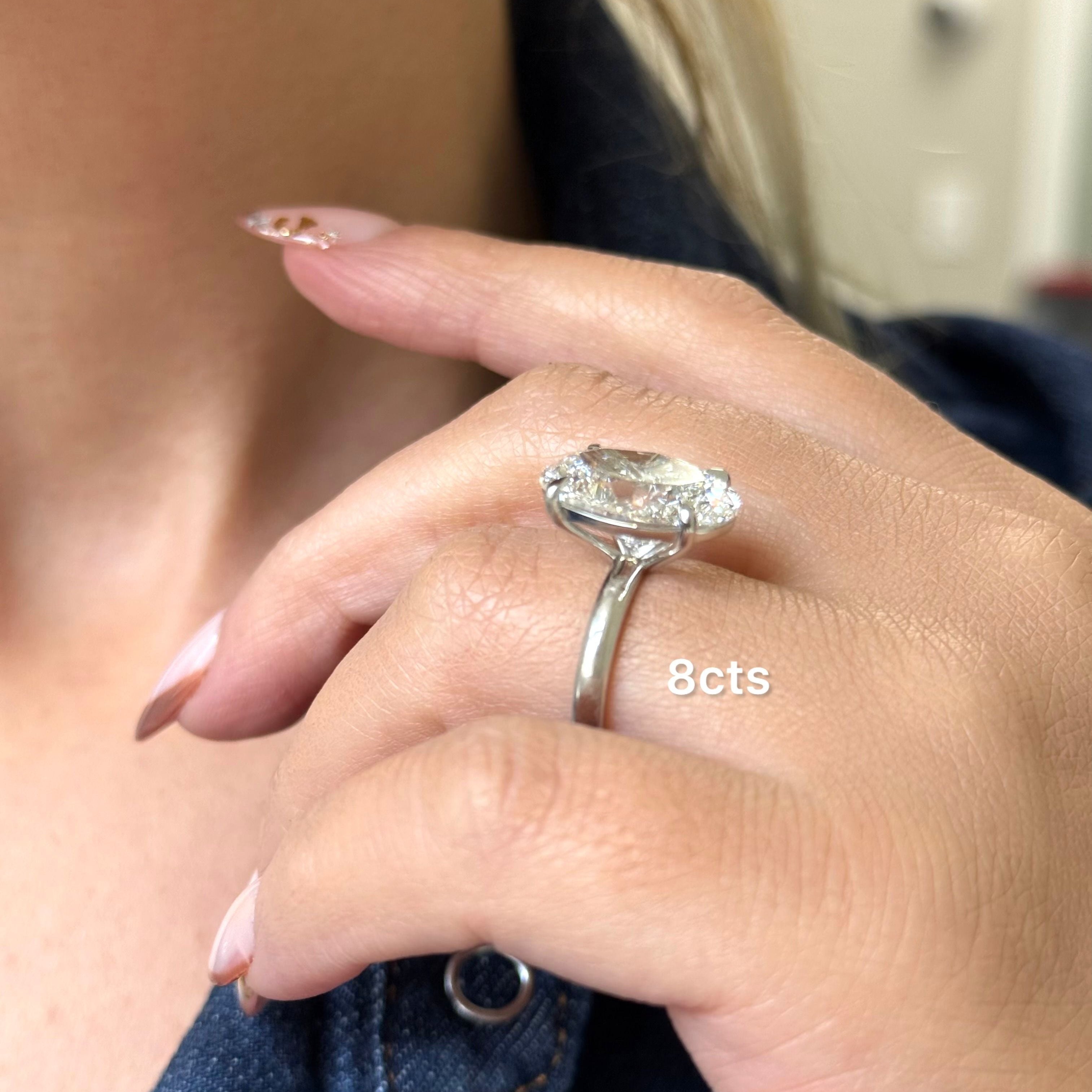
A 1–2ct oval solitaire reads as a delicate, contemporary everyday ring. At 3–5ct, the oval becomes confidently visible on the hand. At 8–10ct, this is a statement engagement ring — the kind that draws attention and defines the look. At 15ct and above, the ring moves into high-jewelry territory.
The same solitaire design works at every scale because the oval's elongation is proportional — a 1ct oval and a 10ct oval both read as long and finger-flattering, just at different levels of visual presence.
How to pair with a wedding band
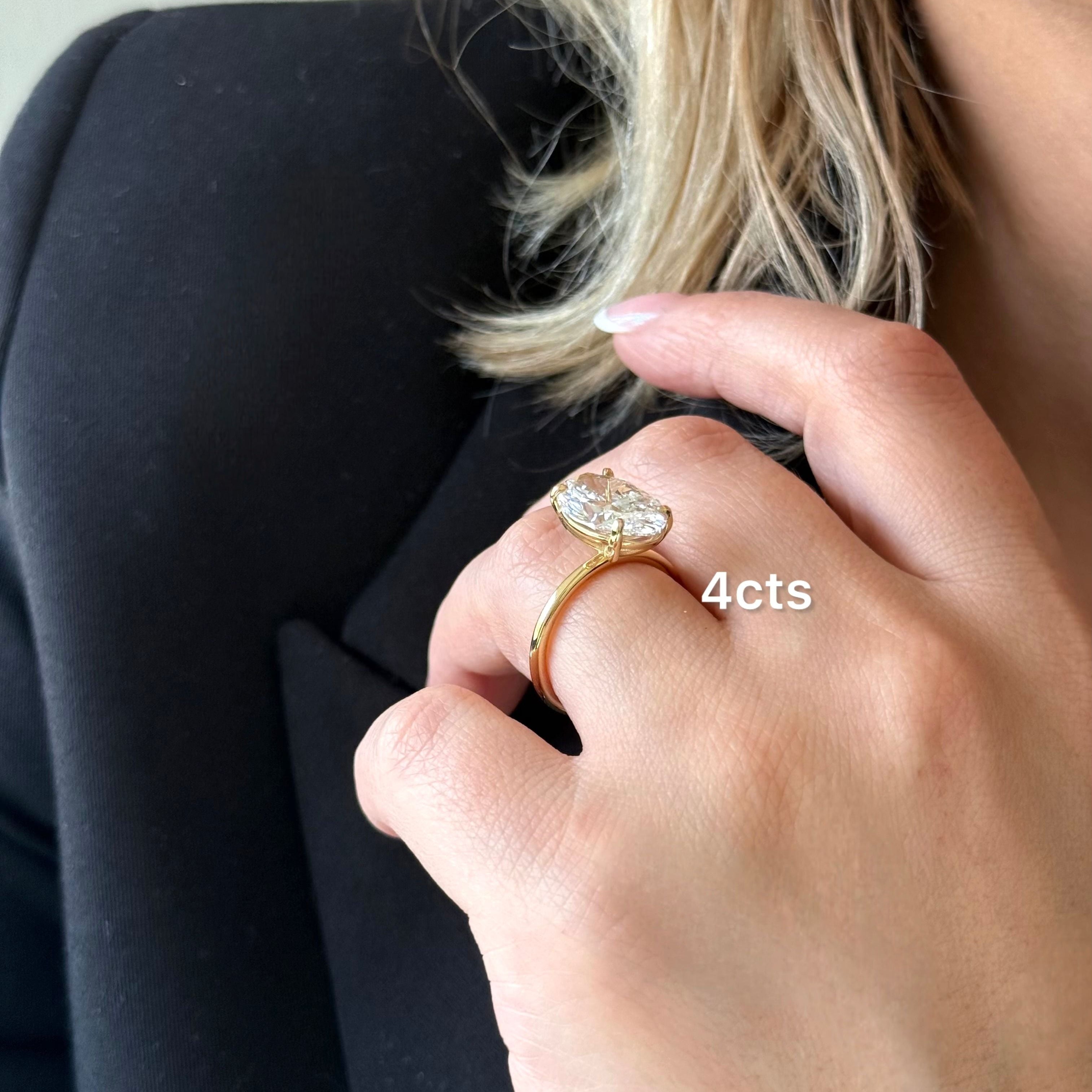
An oval solitaire sits slightly higher than a flush ring because the prongs elevate the stone. A curved (contoured) wedding band shaped to nest under the oval is the most common pairing. A thin straight pavé band also works — the small gap between band and solitaire reads as clean rather than mismatched. We can recommend specific bands once you've selected your carat weight and metal.
Choose options
Shop the look
Style with
Shop the look

Frequently Asked Questions
Oval diamonds elongate the finger more than any other cut — the elliptical shape creates the visual impression of a longer, slimmer finger regardless of hand size. Ovals also appear larger than rounds of the same carat weight because the oval spreads more across the finger's surface. For buyers who want maximum visual presence per carat, the oval is one of the best choices in engagement ring cuts.
A solitaire engagement ring features a single center stone with no accent diamonds — no halo, no side stones, no pavé band. The design puts the center diamond as the complete focus of the ring. Solitaires are the most classic engagement ring format and pair with the widest range of wedding band styles because there's nothing competing with a future band.
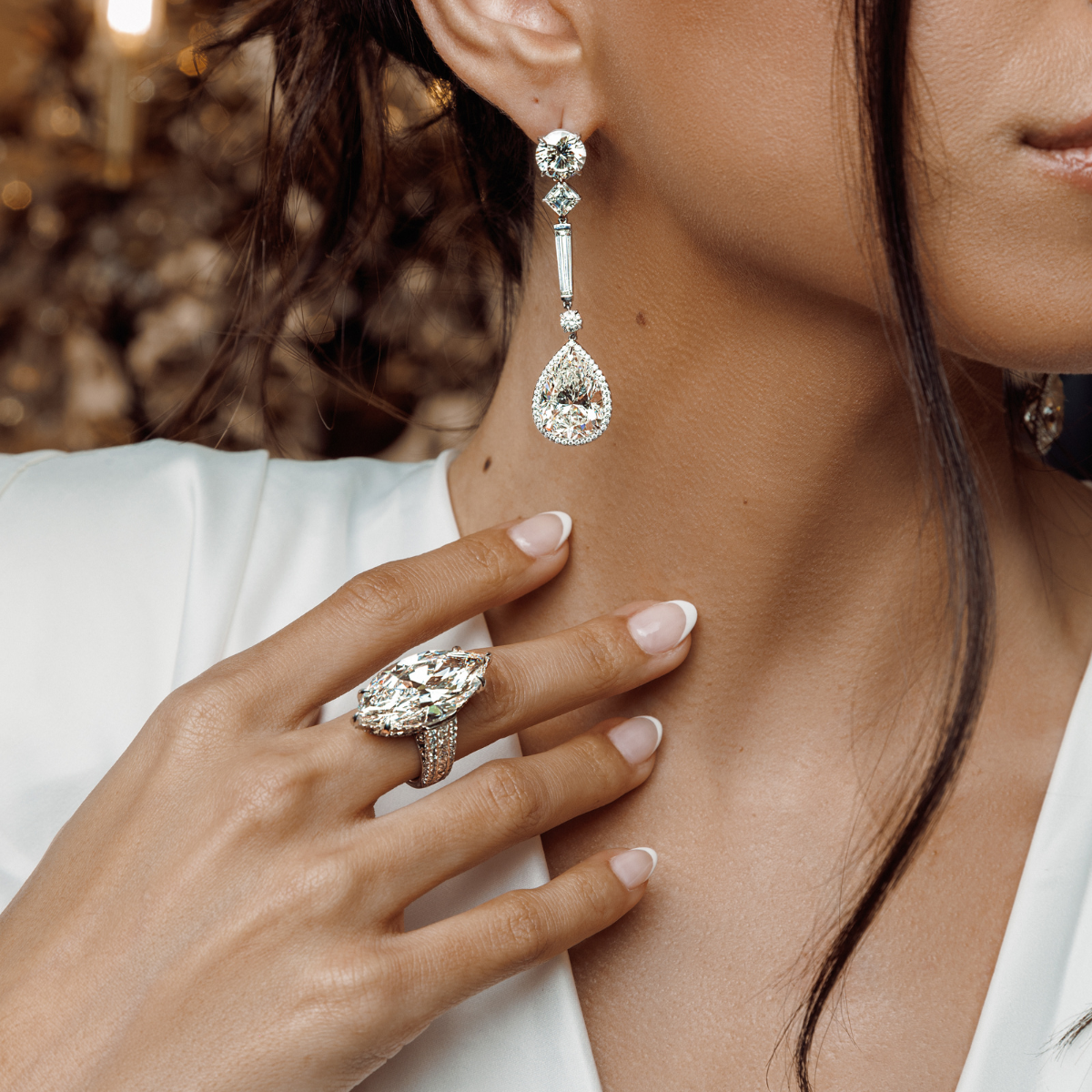
The right carat weight depends on your preference for visual presence and budget. As a general guide: 1–2ct reads as refined and delicate; 3–5ct reads as a confident, visible solitaire; 6–10ct becomes a statement ring; 15ct+ is high-jewelry scale. The on-finger photos above show several carat weights on an actual hand for scale reference.
The default size is 6.5. All ring sizes are available — please specify your size at checkout, or contact us before ordering if you need a size outside the standard range. We can also resize after delivery; contact us to discuss resizing options and any associated fees.
The ring is offered as a classic solitaire. For variations — a hidden halo, a pavé band, side stones, or a different shank profile — please use the Contact to Inquire button. Custom configurations typically take 2–4 weeks.
Yes. Lab-grown diamonds are chemically, physically, and optically identical to mined diamonds — the only difference is how they're produced. They're graded on the same 4Cs standard (cut, color, clarity, carat weight) and have the same hardness (Mohs 10) and brilliance.